6 Books to Become a Better Thinker (and Decide Better)
What are some good books to help me become a better thinker?
Better thinking isn’t about collecting more facts—it’s about building repeatable habits for clearer decisions, fewer blind spots, and stronger reasoning under pressure. Our team recommends starting with a small “thinking shelf” that covers logic, cognitive biases, decision-making, and mental clarity. Below are reliable picks that work well together, plus a simple way to use them so you actually change how you think day to day.
Books that sharpen reasoning and reduce mental errors
“Thinking, Fast and Slow” (Daniel Kahneman) helps you spot when your brain is running on autopilot versus careful analysis—useful for buying decisions, relationship conflicts, and workplace judgments.
“Superforecasting” (Philip E. Tetlock & Dan Gardner) trains probabilistic thinking. You’ll learn to make better predictions by updating your views as new information arrives.
“The Scout Mindset” (Julia Galef) focuses on thinking to see what’s true, not to win. It’s a practical antidote to defensiveness and motivated reasoning.
“How to Read a Book” (Mortimer J. Adler & Charles Van Doren) upgrades comprehension and analysis. It’s ideal if you want to turn reading into genuine understanding instead of highlight collecting.
Books for building a stronger decision process
“Decisive” (Chip Heath & Dan Heath) offers a structured method to avoid narrow framing and confirmation bias when choices feel high-stakes.
“Noise” (Daniel Kahneman, Olivier Sibony & Cass R. Sunstein) shows how inconsistency quietly ruins judgments—and how to set up simple decision hygiene to reduce it.
How to get results without reading 20 books
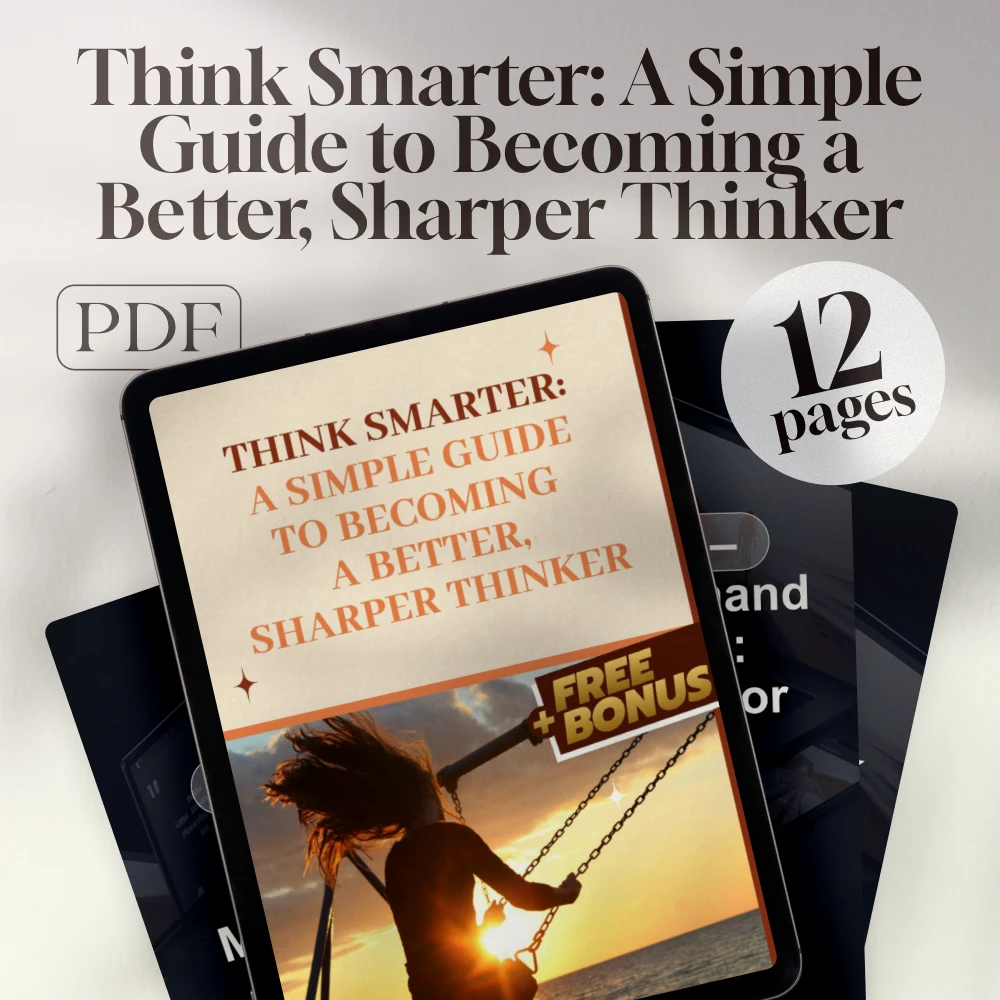
Pick one “bias” book and one “process” book, then apply one tool per week (for example: pre-mortems, base rates, or writing down alternatives before choosing). If you want a quick reset to support calmer, clearer choices, pair your reading with our guide: Think Smarter in 7 Days: A Reset for Clearer Decisions.
FAQ
How can I practice critical thinking daily?
Write down the decision, your top three assumptions, and one piece of disconfirming evidence you’d accept. Then revisit the outcome later to see which assumption mattered most.











Leave a comment