Floating TV Stands: Worth It? Pros, Cons & Fit Tips
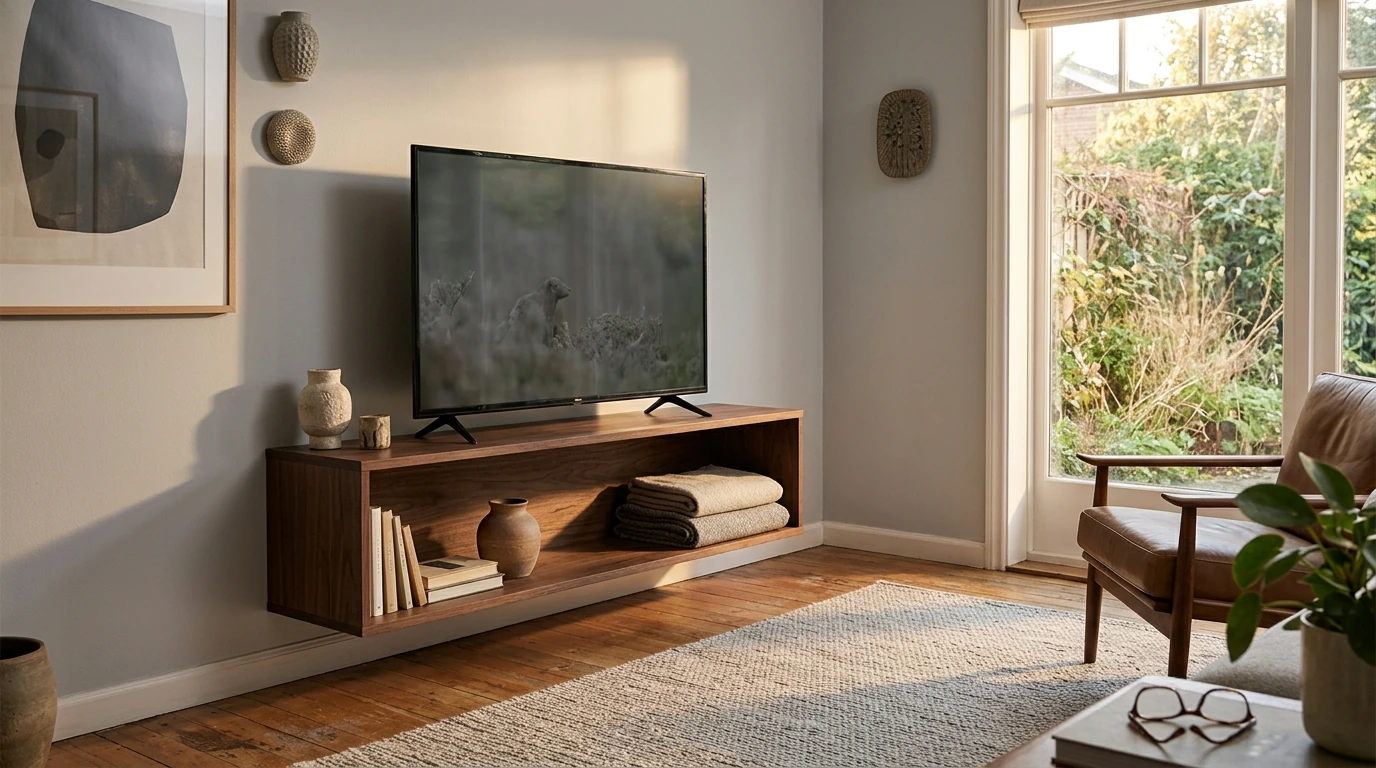
Are floating TV stands worth it?
Floating TV stands are worth it when you want a cleaner look, easier floor cleaning, and a setup that feels more built-in than bulky. Our team typically recommends them for smaller living rooms, modern spaces, or anywhere you want the TV area to feel lighter and more organized.
What you gain with a floating TV stand
A more open, modern layout
By lifting the console off the floor, you visually “return” space to the room. That can make tight areas feel less crowded and keeps attention on the TV wall instead of a large base cabinet.
Easier cleaning and fewer scuffs
With the floor clear underneath, vacuuming and mopping are faster, and there’s less wear on corners from shoes, pets, or moving furniture around.
Better cable control (when planned right)
Many floating styles pair well with a wall-mounted TV because cords can be routed behind the unit or through a raceway, helping you avoid a tangled look—especially if you’re using a soundbar and a few devices.
What to consider before you commit
Wall strength and mounting method
A floating stand needs solid anchoring, ideally into studs or into masonry with the correct hardware. Drywall-only anchors can be risky when the unit is loaded with a receiver, game console, or heavier decor.
Realistic weight and storage needs
Floating units often look sleek because they’re shallower and more minimal, which can mean less capacity for large components. If you have a full-size AVR, big center speaker, or lots of physical media, you may prefer a deeper cabinet or a mixed setup.
Height and daily comfort
Mount the stand at a height that works with your seating and the TV position. Too high can feel awkward; too low can reduce the “floating” effect and crowd devices that need ventilation.
How we’d choose the right one for your room
Start with what must fit (console dimensions and ventilation), then confirm your wall type and stud spacing, and only then pick the length and finish. If you want a deeper breakdown of pros, cons, and setup tips, visit our full guide: https://prismelle.shop/are-floating-tv-stands-worth-it/.
FAQ
Do floating TV stands work in rentals?
They can, but you’ll need to be comfortable making wall holes and patching them later. If your lease limits mounting, a floor-standing console is usually the safer choice.










Leave a comment