
Sideboard vs Buffet Cabinet: Key Differences Explained
What is the difference between a sideboard and a buffet cabinet?
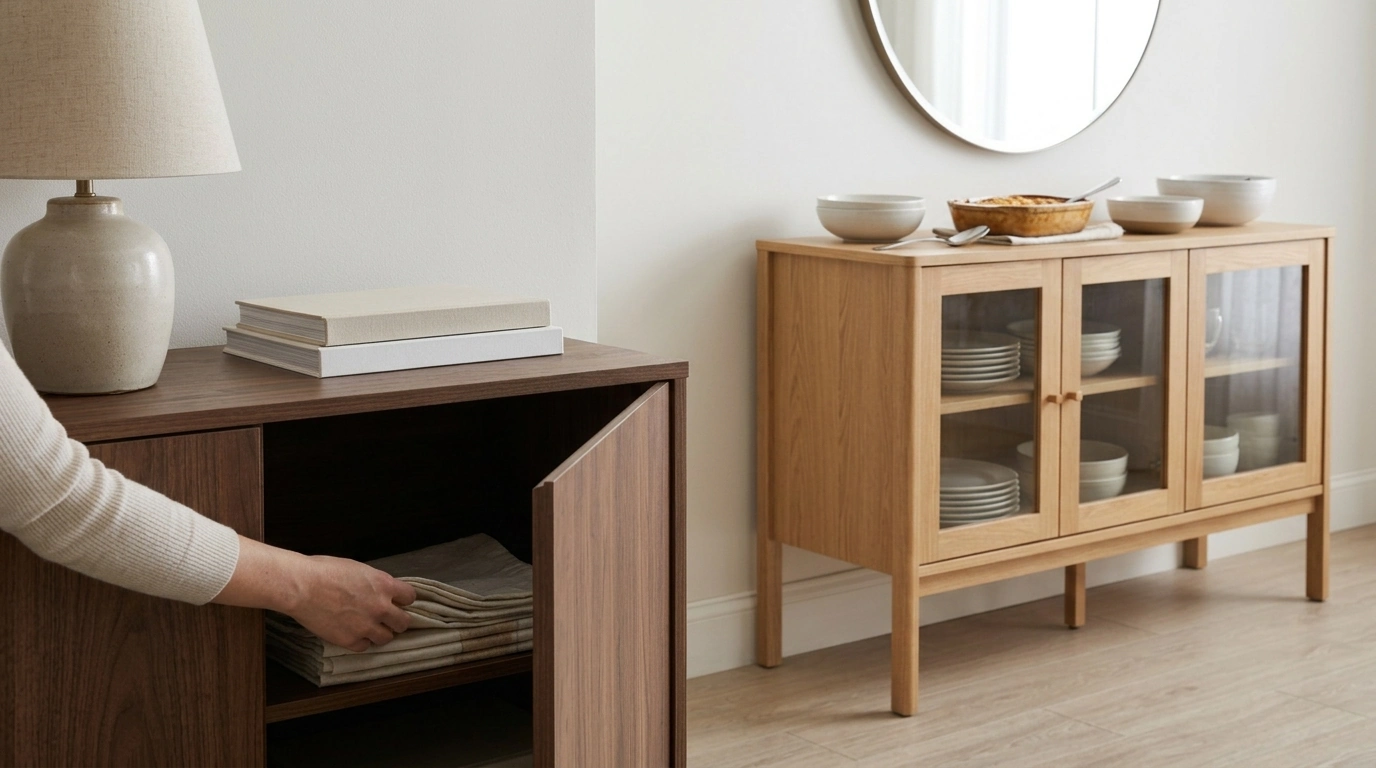
A sideboard and a buffet cabinet are both low, storage-focused pieces of furniture, but they’re named for how they’re traditionally used. A sideboard is a versatile storage cabinet that can live in dining rooms, living rooms, entryways, or bedrooms. A buffet cabinet is typically associated with the dining room and is meant to support serving—think extra dishes, linens, and a surface for setting out food.
How their purpose shapes the design
Sideboards tend to prioritize everyday storage and styling flexibility. They often have a balanced mix of doors, drawers, and shelves, making them handy for everything from board games to barware. Buffet cabinets usually emphasize a broad, open top for serving, and many include dining-specific details like compartments that better suit platters, napkins, and table settings.
Where they’re most commonly placed
Buffet cabinets are most at home along a dining room wall, positioned as a serving station during meals and gatherings. Sideboards can do that too, but they’re equally common as media consoles, hallway storage, or living room anchor pieces. If the piece needs to work in multiple rooms over time, “sideboard” is often the closer fit.
Size, height, and storage configuration
Both pieces are usually similar in height—low enough to access comfortably and high enough to serve as a display surface. The main difference is intent: buffets sometimes run a bit longer to maximize serving space, while sideboards may lean into more varied storage layouts (like deeper cabinets or a stronger drawer focus) to suit mixed-use needs.
What to choose for a modern home
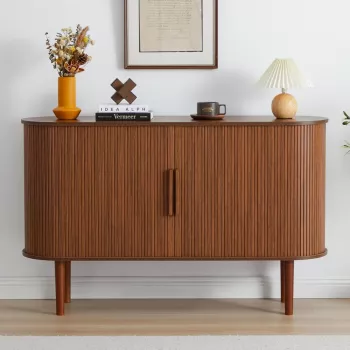
In contemporary furniture, the terms are frequently used interchangeably. If the look and storage are right, the label matters less than measurements, door/drawer configuration, and how you plan to use the top surface. For a modern example with clean lines and practical storage, see the detailed guide here: walnut fluted sliding door modern sideboard cabinet.
FAQ
Can a sideboard be used as a TV stand?
Yes, many sideboards work well as TV stands as long as the length supports your screen size and the cabinet layout accommodates cables and devices.













Leave a comment