53″ Walnut Fluted Sliding Door Sideboard: Modern Storage
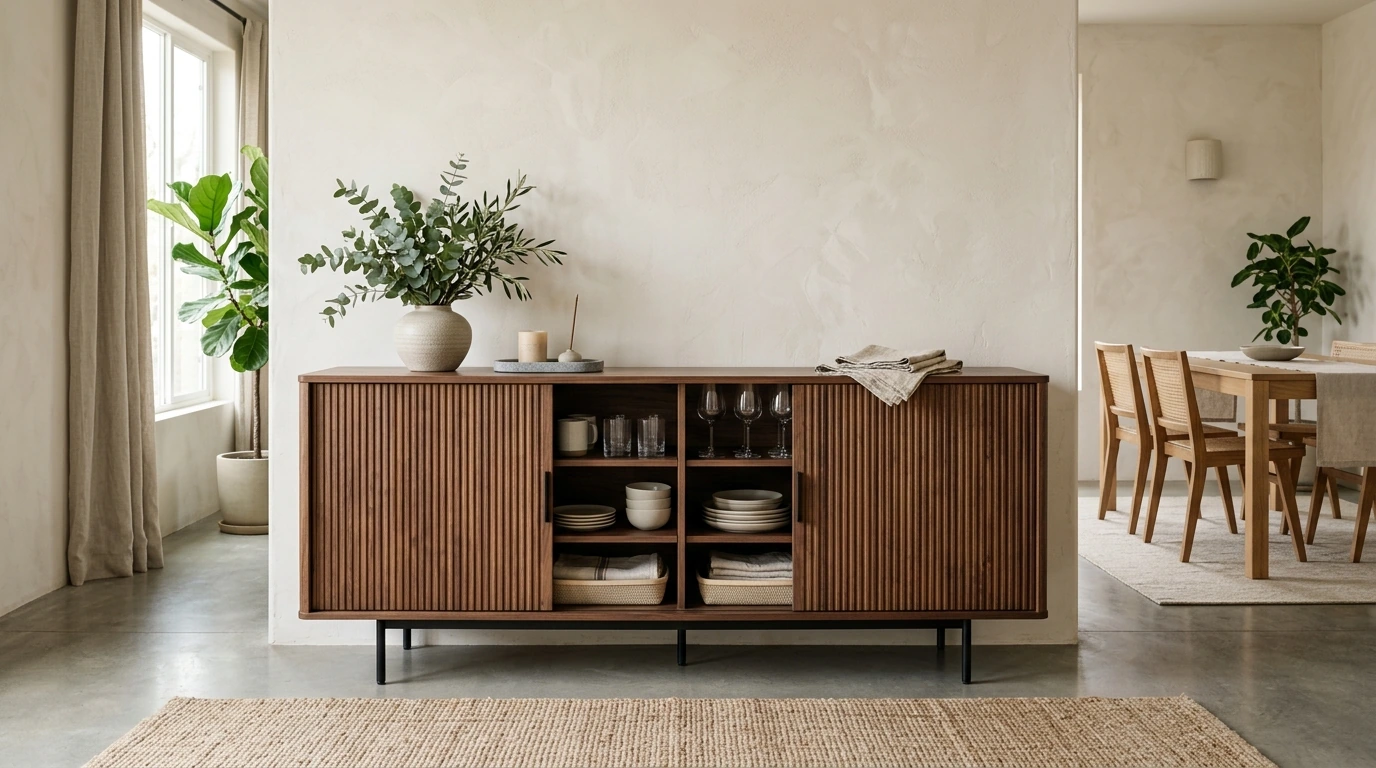
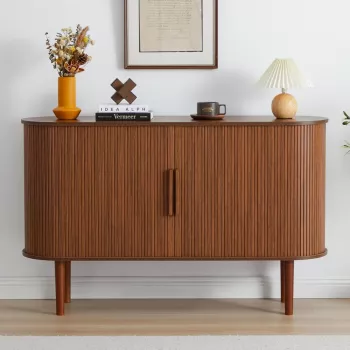
53” Modern Sideboard Cabinet with Fluted Sliding Doors – Walnut Buffet Console
A walnut sideboard with fluted sliding doors brings warm wood tone, texture, and streamlined storage into dining rooms, living spaces, and entryways. This 53” buffet console is designed to keep everyday essentials organized while presenting a clean, modern profile that fits comfortably with contemporary, mid-century, and Japandi-inspired interiors. If you’re looking for a piece that feels elevated without being fussy, fluted detailing and a low, horizontal silhouette can deliver that “finished room” effect while staying practical for daily routines.
What Makes the Fluted Sliding-Door Design Stand Out
- Fluted door fronts add depth through subtle grooves that catch light and create soft shadow lines—visual interest without busy knobs or oversized pulls.
- Sliding doors conserve space compared with swing doors, making this style especially helpful in tighter dining nooks, apartments, or open-plan layouts where traffic flows past the cabinet.
- Walnut plays well with modern materials like black metal accents, warm whites, natural stone, and muted textiles, helping the cabinet blend in while still feeling intentional.
- A low, elongated shape visually widens a wall and creates a stable base for a mirror, framed art, or a gallery ledge above.
Where It Works Best at Home
- Dining room buffet: Keep serving platters, glassware, linens, and small appliances organized while leaving the top clear for hosting and plating.
- Living room console: Tuck away board games, media accessories, and décor backups while maintaining a refined, furniture-forward look.
- Entryway sideboard: Create a landing zone for keys, bags, and seasonal accessories; add a tray on top to make daily drop-offs feel effortless.
- Home office storage: Hide paper goods, cables, and equipment behind doors to reduce visual clutter—especially useful when video calls put your background on display.
Size, Clearances, and Layout Tips
- Measure the wall span and leave breathing room on both sides so the cabinet doesn’t feel wedged; even a few inches of margin helps the silhouette read as “designed,” not crammed.
- Prioritize circulation in dining areas: People should be able to pass behind chairs comfortably. Sliding doors reduce the chance of a door panel blocking a pathway during use.
- Balance wall art proportions: If placing art above, a width around 2/3 to 3/4 of the cabinet width typically feels well-proportioned.
- Keep styling practical: A pair of lamps, a low vase, or a tray keeps the surface useful for serving without turning it into a fragile display.
Quick Placement Guide for a 53” Sideboard
| Placement area | What to check | Practical target |
|---|---|---|
| Dining room | Walkway behind chairs | Keep pathways comfortably open; sliding doors help in narrow zones |
| Living room | Relationship to sofa/TV | Align with main sightlines; avoid blocking vents and outlets |
| Entryway | Door swing and traffic | Place where it won’t pinch the path; use top as a drop zone |
| Open-plan spaces | Visual zoning | Use as a soft divider; style top to match the adjacent zone |
Storage and Daily Use Ideas
- Create zones inside: Dedicate one side to entertaining (napkins, candles, bottle opener) and the other to less-used serving ware or backups.
- Use bins or shallow trays: Smaller items stay put when doors slide, and it’s easier to “reset” the cabinet after a gathering.
- Keep frequently used items front-and-center: Placemats, coasters, or streaming remotes should be easiest to reach.
- Add felt liners where it counts: They can reduce noise from dishes and provide an extra layer of protection for interior surfaces.
Styling the Walnut Finish with Modern Decor
- Build a calm palette: Walnut looks especially cohesive with warm neutrals like cream, sand, camel, and soft taupe.
- Choose a consistent contrast: Matte black frames, sculptural ceramics, or brushed brass accents add definition—pick one or two finishes and repeat them.
- Echo the fluting with texture: Bouclé, linen, ribbed glass, and subtle stone veining complement the door detail without competing.
- Keep the top low-profile if it serves food: One statement piece plus a functional tray preserves usable space for serving, coffee setups, or seasonal moments.
Care and Maintenance for Long-Lasting Good Looks
For deeper background on how wood behaves and why protection from moisture and heat matters, see the U.S. Forest Service Wood Handbook and care guidance from the American Wood Council.
Shop In-Stock Favorites
- 53” Modern Sideboard Cabinet with Fluted Sliding Doors – Walnut Buffet Console (USD 482.58)
- led-illuminated-pet-nail-clipper-with-anti-splash-guard (USD 12.77)
- hand-crocheted-cotton-triangle-scarf-headband-vintage-style-hair-accessory-for-women (USD 11.77)
- elevated-comfort-cat-small-dog-feeding-bowl (USD 11.77)
A Modern Sideboard That Balances Texture and Function
FAQ
How much clearance is needed to use sliding doors comfortably?
Sliding doors don’t require front swing space, so you can place the cabinet closer to dining chairs or a walkway than a hinged-door piece. Leave enough room in front to stand comfortably while opening it, and make sure you can access both ends of the interior without the cabinet being jammed into a corner.
Is walnut a good finish for a dining room buffet?
Yes—walnut is a popular choice because it adds warmth and pairs easily with modern and classic décor. Protect the surface with coasters and mats, wipe spills quickly, and avoid letting moisture or heat sit on the top for long periods.
What should be stored in a sideboard versus upper cabinets?
Heavier or frequently used items like platters, serving bowls, and small appliances are often more convenient in a sideboard because they’re easier to lift at waist height. Upper cabinets work well for lighter, rarely used, or fragile pieces when they can be stored safely; organizing by frequency of use keeps daily routines smooth.













Leave a comment