Pack Lighter With a Minimalist Travel Packing Planner
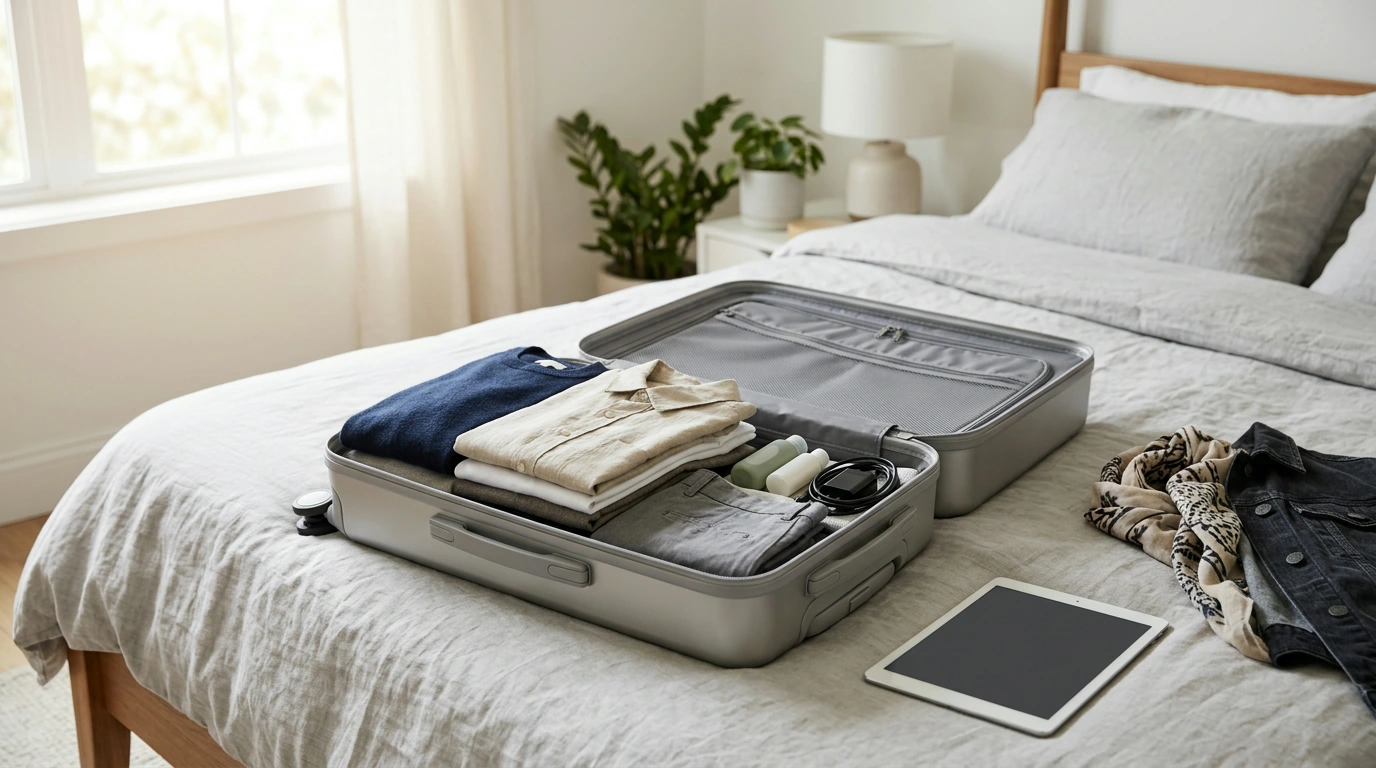
Packing lighter begins with a simple question: What will you actually use on this trip? When you plan around your itinerary instead of filling every corner of your suitcase, it becomes easier to leave behind the “just in case” extras.
Our approach is practical rather than restrictive. A digital packing guide can help you organize your choices, keep essentials in view and prepare a bag that works for the journey ahead.
Start with the trip, not the suitcase
Before choosing clothes or reaching for a bag, look at the shape of your trip. Note how many days you’ll be away, the expected weather and the activities you’ve planned. A city weekend with dinners out calls for different choices than a week of hiking, even if both trips use the same carry-on.
Consider laundry access, too. If you can wash clothes partway through a longer trip, you may not need a fresh outfit for every day. If laundry is unavailable or your schedule is packed, bring enough to stay comfortable without depending on a wash.
Choose a bag that suits your transportation and what you need to carry. Before flying, check your airline’s current size and weight limits, including any rules for a personal item. Limits can vary by airline, route and fare, so make this part of your plan before the bag is full.
Build a small, flexible wardrobe
A lighter wardrobe works best when each piece has more than one job. Choose colors that coordinate, fabrics you feel comfortable rewearing and layers that can handle changes in temperature. A lightweight top might work on its own during the day and under a sweater in the evening.
The 3-3-3 approach is a useful starting point: three tops, three bottoms and three pairs of shoes. Choose items that combine easily, then adjust the quantities to suit your trip. You might need fewer shoes for a casual weekend or extra layers for cold weather. The goal is flexibility, not meeting a strict limit.
| Category | Example choices | Planning tip |
|---|---|---|
| Tops | Three mix-and-match tops | Choose pieces that work with each bottom. |
| Bottoms | Three versatile bottoms | Consider weather and planned activities. |
| Shoes | Up to three pairs | Wear the bulkiest pair in transit if comfortable. |
| Essentials | Underwear, toiletries and medication | Adjust quantities to your needs and trip length. |
Lay out a few complete outfits before packing. If an item only works with one other piece, decide whether that combination is worth the space. Keep any activity-specific clothing you genuinely need, even if it doesn’t fit neatly into a capsule wardrobe.
Make room for the essentials
Separate the items you must have from the things you could reasonably buy at your destination. Identification, travel documents, medication and chargers deserve a place in your plan. A spare accessory or a full-size toiletry you can easily replace may not.
For air travel, review the current TSA liquids rule and applicable guidance for medications before departure. Rules can differ outside the United States, so check the requirements for each airport on your route. The CDC’s Pack Smart guidance can also help you prepare health-related essentials for your destination.
Leave a little unused room in your bag. That space can accommodate a purchase, an extra layer or something you need to move between bags during the trip. You don’t have to pack to capacity simply because space is available.
Put your packing plan into practice
Our Minimalist Travel Packing Planner is a digital guide for organizing a lighter, more intentional trip. It’s listed for $9.99 USD and can serve as a planning companion as you decide what deserves a place in your bag.
Start by reviewing your itinerary, then choose versatile clothes and list your essentials. Once everything is gathered, check the packed bag against your airline’s or other transportation provider’s requirements. If it’s too heavy or crowded, revisit duplicate items before removing something you need.
If you’re also organizing your trip budget, our Essential Adult Skills Guide covers budgeting and other everyday life-management topics. Our team suggests treating packing and spending as separate plans: a smaller bag can be useful, but it shouldn’t come at the expense of necessities.
Do a final departure check
Shortly before you leave, revisit the forecast and itinerary. Remove duplicates you’re unlikely to use, and confirm that your identification, tickets and other required documents are accessible. Keep medication, chargers and anything else you’ll need in transit where you can reach them without unpacking your entire bag.
Finally, lift or roll your packed bag and make sure you can manage it comfortably. A thoughtful plan leaves you ready for the trip—not preoccupied with everything you brought along.
FAQ
What is the 3-3-3 rule for travel packing?
The 3-3-3 approach uses three tops, three bottoms and three pairs of shoes that can be combined into multiple outfits. Adapt the quantities to your climate, activities and personal needs.
How can I pack lighter for a longer trip?
Choose versatile layers and repeatable outfits, and plan to do laundry when practical. Keep enough essentials for your personal needs and destination.
What should I check before flying with a carry-on?
Check your airline’s current carry-on size and weight limits, along with airport security requirements for liquids and other restricted items.












Leave a comment