New Puppy Training: A Four-Week Starter Guide
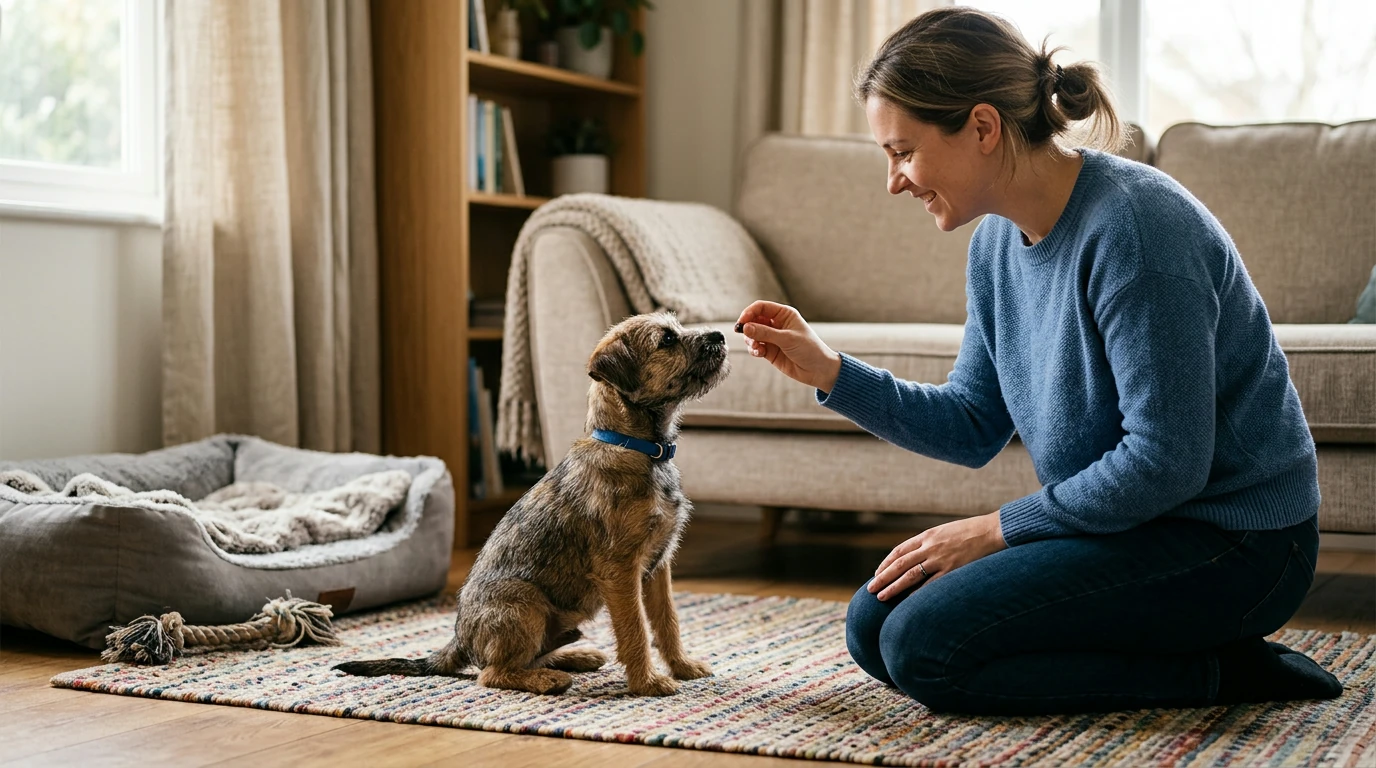
Bringing a puppy home is exciting, but the first few days can feel busy for both of you. A predictable routine, gentle encouragement, and a few minutes of practice at a time can make learning easier. You don’t need a perfect schedule; you need a plan you can repeat and adjust as your puppy grows.
Our printable New Puppy Training Starter Guide brings a four-week routine, house-training, basic commands, and socialization together in one beginner-friendly resource.
Start With Trust and a Predictable Routine
Start by giving your puppy a safe, quiet place to rest and a regular rhythm for meals, bathroom breaks, play, and sleep. A familiar sequence helps you anticipate your puppy’s needs and gives your puppy time to settle into a new home.
Keep early interactions gentle. Reward the behaviors you want to see with praise, play, or small treats your puppy enjoys. If your puppy seems distracted or unsure, make the task easier and try again later. Puppies progress at different rates, so patience is more useful than punishment.
Everyone in your household can help by using the same cues and following a similar bathroom routine. Consistency makes it easier for your puppy to understand what earns a reward.
Build Your First Four Weeks Around Small Wins
The schedule below is an example you can adapt, not a description of the guide’s exact weekly contents. Your puppy’s age, energy, and comfort should shape the pace. Practice for a few minutes at a time, and revisit earlier skills whenever you need to.
| Week | Focus | Simple practice |
|---|---|---|
| 1 | Settling in and house-training | Establish a bathroom routine and reward outdoor success. |
| 2 | Attention and name response | Say your puppy’s name and reward a glance toward you. |
| 3 | Basic cues | Practice short, reward-based sit and come sessions. |
| 4 | Confidence and consistency | Continue routines and introduce gentle, positive experiences. |
These stages can overlap. For example, you can reward a glance toward you during the first week while continuing house-training throughout the month. A small, repeatable success is a useful place to start.
Make House-Training Easier
Take your puppy to the same bathroom area after waking, eating, and playing, as well as regularly between those times. Stay nearby and give your puppy a little time to go. When your puppy finishes in the right place, reward promptly so the reward is connected to the behavior.
Indoors, supervise your puppy and watch for signs that a break may be needed. If accidents happen, clean them without scolding. An accident is a signal to adjust your supervision or offer more frequent breaks, not a reason to punish your puppy.
There is no single schedule that fits every puppy. Young puppies may need especially frequent opportunities, and your routine may change with meals, activity, and age. For more practical guidance, see Humane World for Animals’ house-training advice.
Teach Useful Cues Through Play
Begin with attention. Say your puppy’s name once in a cheerful voice, then reward a glance toward you. Practice in a quiet space first; as your puppy becomes comfortable, you can gradually try it around mild distractions.
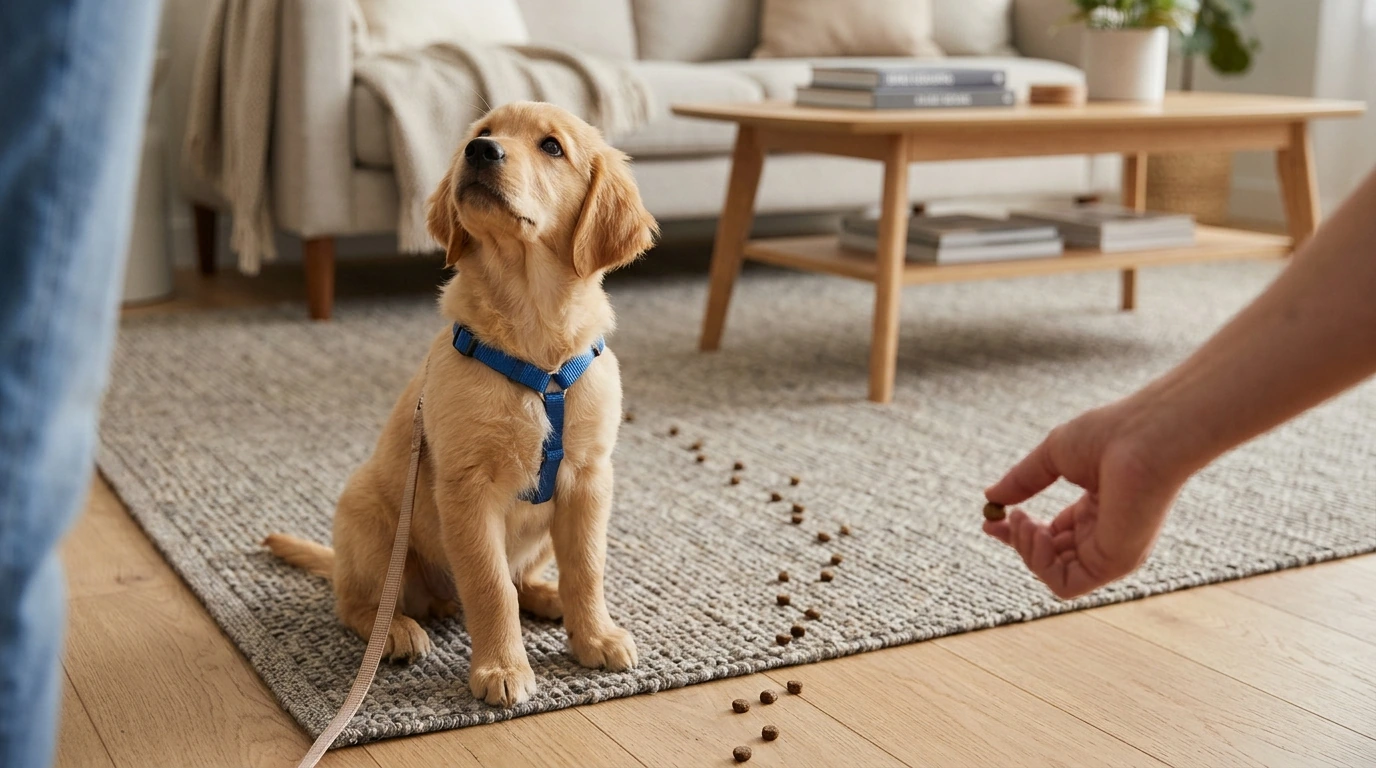
For “sit,” reward your puppy when their bottom reaches the floor, then pair the action with the cue as they begin to understand it. For “come,” start close by, use an upbeat voice, and reward your puppy for moving toward you. Keep the experience pleasant so coming to you feels worthwhile.
Use play and praise as well as treats when they motivate your puppy. Stop while the session is still going well, before your puppy becomes tired or frustrated. Several brief practices can be more manageable than one long lesson.
Introduce the World at Your Puppy’s Pace
New people, everyday sounds, different surfaces, and unfamiliar places can all be part of socialization. Introduce experiences gradually and pair them with something pleasant, such as a treat or a favorite game. Let your puppy observe without forcing an interaction.
If your puppy freezes, tries to move away, or seems overwhelmed, create more distance and allow time to recover. A calmer, shorter experience is more useful than pushing through a frightening one.
Ask your veterinarian about vaccination guidance and which socialization settings are appropriate for your puppy. The American Veterinary Society of Animal Behavior’s puppy socialization position statement offers additional guidance on early, positive experiences.
Keep the Guide Close as Your Puppy Grows
Our team recommends keeping your plan simple enough to use every day. The printable New Puppy Training Starter Guide is available for $65.99 and offers a convenient starting point for a four-week routine, house-training, commands, and socialization.
For a complementary resource, explore our Must-Know Pet First-Aid Cheat Sheet. Keep your veterinarian’s contact information handy, too: a cheat sheet does not replace veterinary care.
FAQ
What is the first thing you should teach a new puppy?
Start by building trust and rewarding your puppy for responding to their name. At the same time, establish a consistent house-training routine.
How often should a puppy go outside for house-training?
Offer frequent bathroom breaks, especially after waking, eating, and playing. Adjust the timing to your puppy’s age and individual needs.
How can I socialize my puppy safely?
Introduce new experiences gradually and pair them with positive rewards without forcing interaction. Ask your veterinarian about vaccination guidance and safe settings for your puppy.










Leave a comment