
Tankless Water Heater: How Many Bathrooms at Once?
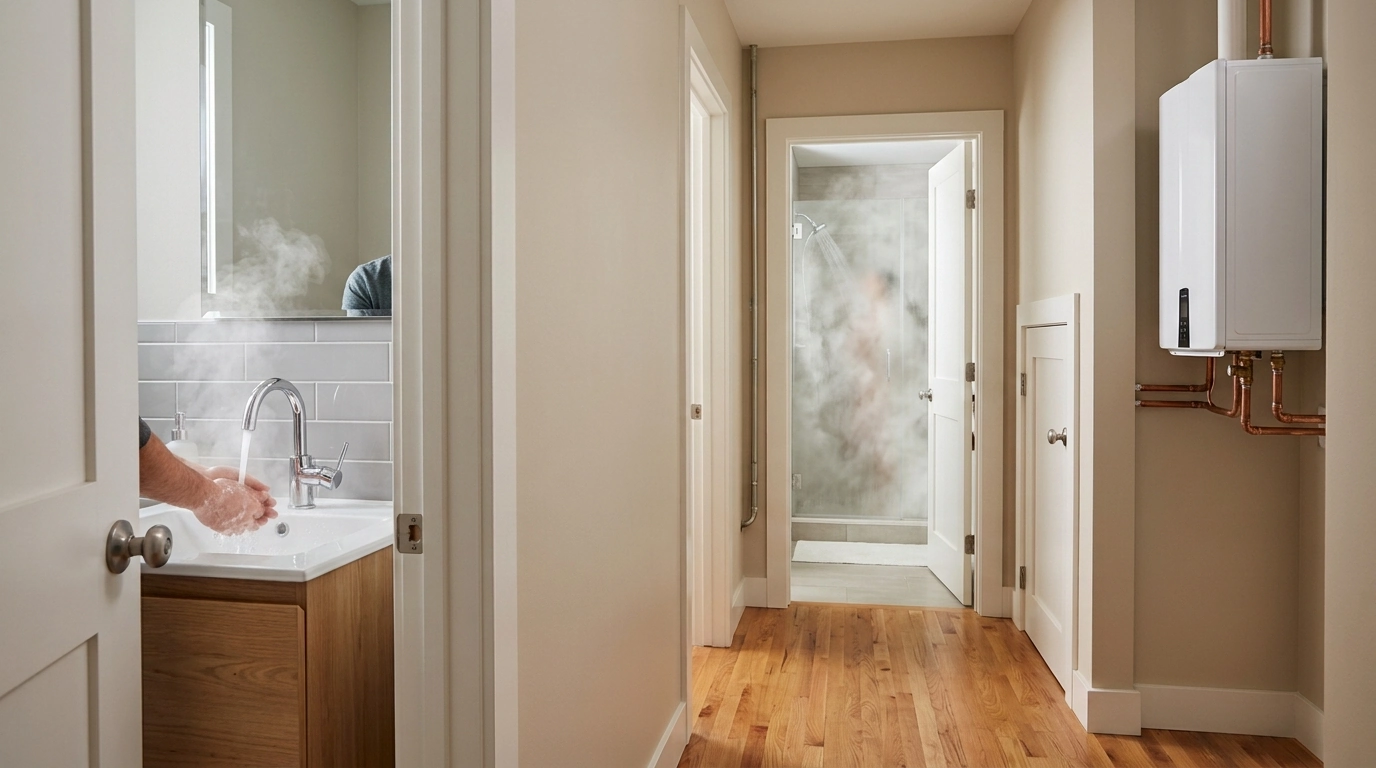
How many bathrooms can one tankless water heater handle?
The number of bathrooms one tankless water heater can handle depends less on the bathroom count and more on how many hot-water fixtures run at the same time. A tankless unit is rated by flow rate (gallons per minute, or GPM) at a specific temperature rise, and every fixture “spends” part of that flow budget.
What “handling a bathroom” really means
A typical shower may need about 1.5–2.5 GPM of hot water depending on the showerhead, mix ratio, and desired temperature. A bathroom sink might use around 0.5–1.0 GPM. If two showers run simultaneously, the heater must supply the combined demand at your required temperature rise—otherwise water turns lukewarm or the flow gets throttled.
Why electric point-of-use models are usually one-bath-at-a-time
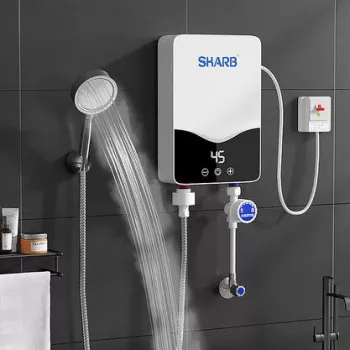
Many compact electric tankless heaters are designed for a single bathroom or a single fixture group, not for multiple showers at once. In particular, a 5,500W instant electric unit typically delivers a modest hot-water flow when the incoming water is cool, making it best suited to one shower (or a sink) at a time rather than two full bathrooms running simultaneously.
If you’re considering a bathroom-focused 5,500W instant heater, see the detailed sizing notes and use-case guidance here: 5500W Instant Tankless Electric Heater for Bathrooms.
When one heater can cover multiple bathrooms
Higher-capacity whole-home tankless systems (often larger electric models or gas-fired units) can support two or more bathrooms—sometimes 2–4 showers at once—if the GPM rating at your local temperature rise matches real simultaneous use. The key is adding up fixture demands (showers, sinks, tub fills) and comparing that total to the heater’s performance chart for your incoming water temperature.
Quick rule of thumb
One compact tankless heater usually equals one bathroom’s “peak” use at a time. For multiple bathrooms with overlapping showers, either step up to a higher-flow whole-home unit or use separate point-of-use heaters per bathroom/zone.
FAQ
Can a tankless water heater run a shower and a sink at the same time?
Sometimes, yes—if the heater’s available GPM at your needed temperature rise exceeds the combined demand. Small point-of-use electric units may handle a sink plus a low-flow shower, but often struggle with a standard shower and another hot-water draw at the same time.












Leave a comment