


Wooden Outdoor Cat Enclosure: Platforms, House & Roof
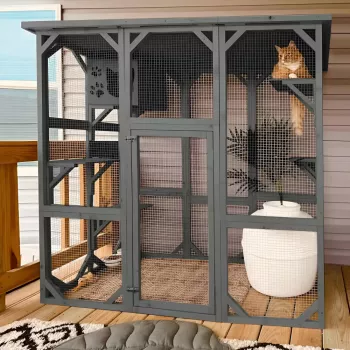
Large Wooden Outdoor Cat Enclosure with Platforms, House, and Weatherproof Roof
An outdoor enclosure can give cats fresh air and sunshine while keeping them protected from traffic, predators, and unexpected escapes. This wooden cat enclosure pairs climbing platforms with a sheltered house and a weatherproof roof, creating a secure space for lounging, observing, and play across changing seasons. For many households, it’s a practical middle ground between fully indoor life and the risks of free-roaming—especially when outdoor time is part of a consistent care routine recommended by trusted pet resources like the American Veterinary Medical Association (AVMA) and the ASPCA.
Who This Enclosure Suits Best
- Indoor cats that need safe outdoor time without roaming risks
- Multi-cat homes that benefit from vertical territory and separate resting spots
- Apartment patios, decks, and backyards where a dedicated cat zone reduces door-dashing
- Owners wanting a more natural look than all-metal runs while still prioritizing security
If your cat chirps at birds from the window, tries to slip past the door, or gets restless without novelty, a structured outdoor setup can add variety without sacrificing boundaries. Enclosures also work well for cats that enjoy “watching the neighborhood” more than sprinting around—platforms and a covered hideaway support that calm, observant style.
Key Features at a Glance
- Wooden frame designed for outdoor placement and a calmer, home-like appearance
- Multiple platforms that encourage climbing, perching, and confidence-building movement
- Integrated house area that offers shade, wind protection, and a retreat zone
- Weatherproof roof intended to help manage sun and rain exposure
- Enclosed design helps prevent unsupervised wandering and reduces contact with wildlife
Quick Comparison: Home Balcony vs. Outdoor Enclosure Setup
| Feature | Balcony/Porch Without Enclosure | Enclosure with Platforms, House, and Roof |
|---|---|---|
| Escape risk | High (rail jumps, gaps, open doors) | Low when properly assembled and latched |
| Shade and shelter | Depends on building layout | Built-in roof and house space for cover |
| Enrichment | Limited (flat space) | Vertical platforms for climbing and lookout points |
| Wildlife exposure | Direct contact possible | Barrier reduces direct contact and surprise encounters |
| Owner peace of mind | Requires constant monitoring | Better for scheduled, safer outdoor sessions |
Placement Ideas and Setup Tips
- Choose a level surface on a patio, deck, or compact yard area; avoid soft ground that shifts after rain
- Position with partial shade when possible to reduce heat buildup during midday sun
- Place the house section facing away from prevailing wind for a calmer rest zone
- Keep the enclosure near a door for easy access and simpler daily checks
- Add a washable outdoor mat under the entry zone to reduce tracked litter and mud
Think about what your cat will do first after stepping inside: many cats prefer to move upward before settling, so keeping the platform area free of clutter helps. If the enclosure is on a deck or pavers, checking level during the first week can prevent a subtle wobble that makes cautious cats hesitant to climb.
Making It Comfortable for All Seasons
- Warm weather: provide fresh water, add a cooling mat, and ensure the house area remains ventilated and shaded
- Rainy days: verify roof coverage directs water away from entry points; keep bedding elevated and dry
- Cold weather: use insulated pads or self-warming mats inside the house; limit time outdoors during extreme cold
- Year-round: rotate toys, add scratch surfaces, and offer two resting spots to reduce tension in multi-cat households
Seasonal comfort is more than temperature—it’s also about choice. A cat that can switch between a covered nook and an open perch is more likely to self-regulate and relax. For enrichment ideas that go beyond “more toys,” resources like International Cat Care highlight how environment and climbing opportunities support natural behaviors.
Safety Checklist Before Each Outdoor Session
- Inspect latches, hinges, and panels for gaps or loosening after wind or storms
- Check for sharp edges, splinters, or protruding fasteners and smooth/secure as needed
- Confirm the enclosure is stable and not rocking; re-level if the surface has shifted
- Supervise introductions: allow short sessions at first so cats learn the space and boundaries
- Avoid leaving cats outside unattended for long periods in areas with extreme weather or high predator activity
A simple routine works well: latch check, quick scan of corners and seams, then a short “settling period” so cats can choose a perch or retreat. For multi-cat homes, watching for guarding behavior around the house entrance or the top platform can prevent minor friction from becoming a recurring issue.
Care and Maintenance for Outdoor Wood
Product Option Available Now
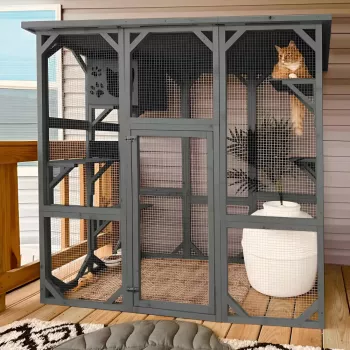
The Large Wooden Outdoor Cat Enclosure with Platforms, House, and Weatherproof Roof is currently available and designed to combine climbing space with a sheltered hideaway. It’s a strong match for cats that like alternating between lookout perches and quiet retreat time, and for households that want an outdoor structure that looks at home on a patio or deck.
For a smoother daily routine, consider pairing the enclosure with a comfort-focused feeding setup indoors, like the Elevated Comfort Cat & Small Dog Feeding Bowl, and keeping grooming tools handy for quick upkeep, such as the LED Illuminated Pet Nail Clipper with Anti-Splash Guard. Small consistency habits—scheduled outdoor sessions, toy rotation, and quick safety checks—often make the biggest difference in long-term use.
FAQ
Can an outdoor cat enclosure replace supervised outdoor time?
It can significantly reduce escape risk and improve safety, but routine checks and reasonable supervision are still recommended—especially in extreme weather or in areas with high predator activity.
How many cats can use a platform-style enclosure comfortably?
It depends on temperament and how well cats share space. Multiple vertical levels and more than one resting spot help, and gradual introductions with monitoring can reduce guarding behavior.
How can overheating be prevented in summer?
Use partial shade placement, provide fresh water, add a cooling mat, and limit midday sessions. Confirm the house area remains ventilated so cats can cool down in the retreat zone.












Leave a comment