Helping Pets Handle Vacuum Stress: A Calmer Routine
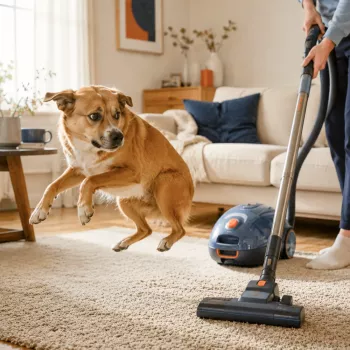
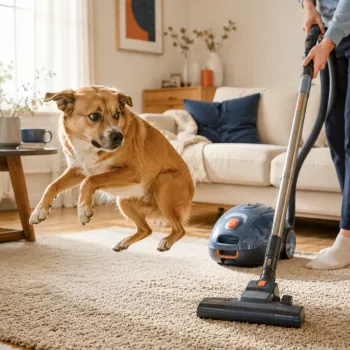
Helping Pets Handle Vacuum Stress starts with a simple idea: cleaning can happen without asking your pet to confront a frightening machine. A gradual routine, a comfortable retreat, and attention to your pet’s reactions can make the experience easier to manage. For additional guidance on the topic, we also offer Helping Pets Handle Vacuum Stress.
Why the Vacuum Can Feel Overwhelming
A vacuum combines loud noise with vibration and unpredictable movement. To a pet, those sensations may arrive all at once, and the machine can seem especially startling when it moves toward them or appears around a corner.
Reactions vary. One pet might leave the room, while another hides, trembles, paces, freezes, or tries to escape. Some pets stop taking treats when they are worried. Notice what your pet does before, during, and after cleaning so you can adjust the routine to their comfort level.
The ASPCA’s guidance on noise fears in dogs offers more information about recognizing and responding to fearful behavior.
Set Up a Safe Space Before Cleaning
Before bringing out the vacuum, give your pet access to a quiet room away from the cleaning area. Include fresh water, familiar bedding, and a place to retreat, such as an open crate or a sheltered spot your pet already likes. The goal is to provide a choice, not to make the room feel like confinement.
Secure doors and potential escape routes before switching on the machine. Make sure your pet cannot bolt outside if startled, but keep their route to the designated hiding place clear. Never pull a pet out of hiding or force them to remain near the vacuum.
If your pet has a companion animal, consider whether they prefer resting together or separately. Set up the space before cleaning starts, rather than waiting until your pet is already distressed.
Build Comfort One Small Step at a Time
Practice when you have a few quiet minutes and do not need to finish the cleaning immediately. Start with the vacuum switched off and far enough away that your pet can notice it while remaining relaxed. Offer a small treat, a favorite toy, or another reward your pet enjoys.
Keep sessions short and move forward only when your pet is comfortable. If they hide, freeze, pace, or refuse a reward they would normally enjoy, increase the distance or stop. You can return to an easier step another day. Progress may take days or longer, and there is no need to follow a fixed schedule.
A Gradual Vacuum Introduction
| Step | What to try | When to pause |
|---|---|---|
| Vacuum off | Let your pet notice the stationary vacuum from a comfortable distance and offer a reward. | Pause if your pet hides, freezes, or refuses treats. |
| Gentle movement | Move the switched-off vacuum briefly while rewarding calm behavior. | Increase the distance if the movement causes concern. |
| Brief sound | Turn the vacuum on briefly at a safe distance, with a clear route to retreat. | Switch it off if your pet shows stress. |
| Short cleaning session | Vacuum briefly while your pet stays comfortable at a distance or in a quiet room. | End the session if your pet becomes distressed. |
Let your pet decide whether to approach. A successful session may simply mean they noticed the vacuum from across the room and remained comfortable. If the sound is too much, return to practicing with the machine off rather than repeating a frightening step.
Make Cleaning Day More Predictable
When practical, choose a regular cleaning window and prepare your pet’s quiet space ahead of time. A predictable sequence—setting up water and bedding, guiding your pet toward their retreat, and then starting a short cleaning session—can help you avoid rushing.
Give your pet time to settle afterward before returning to normal activity. If another household member is available, they can offer calm company in the quiet room, provided your pet finds that reassuring. Avoid making a fuss or trying to coax your pet closer to the noise.
Explore Helpful Resources
Our Helping Pets Handle Vacuum Stress listing is an option if you want guidance focused on this challenge. Review the listing for current product details and price before purchasing. It is not a substitute for veterinary care, and no single resource can promise a particular result.
For a separate resource to keep on hand, we also offer the Must-Know Pet First-Aid Cheat Sheet. It addresses a different need from vacuum training; contact a veterinarian promptly if your pet is injured or you have an urgent health concern.
Know When to Ask for Help
Speak with your veterinarian if your pet’s fear is intense, persists despite gradual practice, or affects daily life. A veterinarian can assess possible underlying issues and recommend appropriate behavioral support. The American Veterinary Medical Association’s animal behavior resources also provide a useful starting point for understanding behavior concerns.
Our team encourages you to work at your pet’s pace. A safe retreat and a shorter cleaning session are worthwhile choices, even if your pet never wants to be close to the vacuum.
FAQ
Should I let my pet hide while I vacuum?
Yes. Give your pet access to a safe, quiet hiding place, and do not pull them out or force an introduction to the vacuum.
Can treats help a pet feel better around the vacuum?
Treats can help build a positive association when your pet is comfortable at the distance you choose. Pause or move farther away if your pet is too stressed to eat.
What if my pet is still frightened after gradual practice?
Stop or slow the sessions and consult your veterinarian, particularly if the fear is severe or persistent. Your veterinarian can help identify appropriate next steps.











Leave a comment